
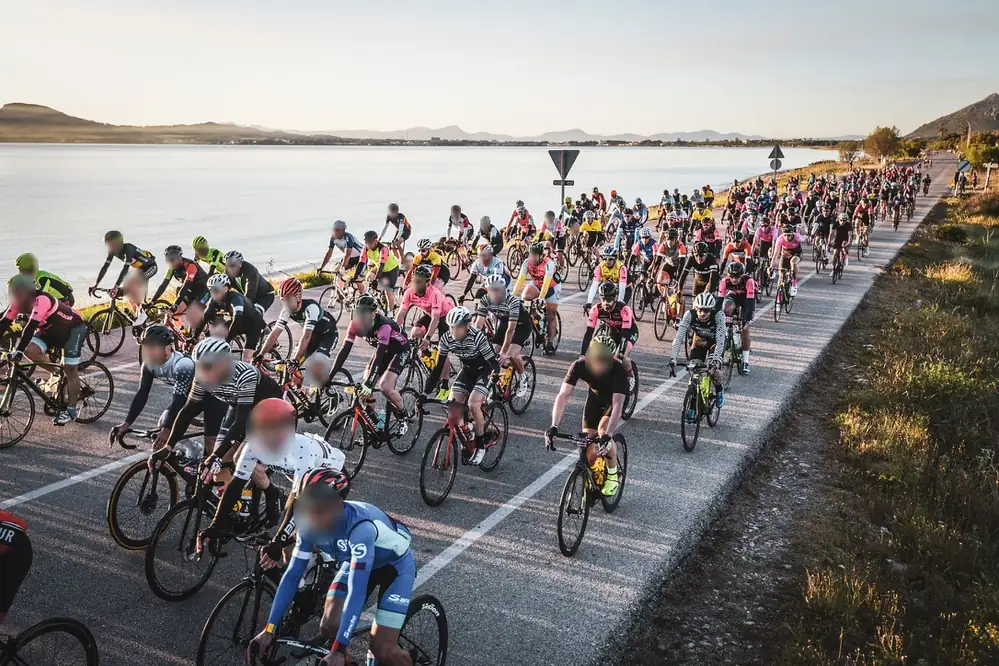
The Mallorca 312 is 312 km with about 5,050 m of climbing on the 2026 profile, and in my experience the clock is harder than the climbing. From the 6:30 start the official cut-offs ask for about 22 km/h over the whole day, which becomes nearly 25 km/h of moving speed once you lose time on the start line and at the aid stations. In 2019 I did exactly that, and the cut-off caught me.
The 2027 edition is sold out
All 8,500 places went within minutes of registration opening on 6 October 2026, according to the Majorca Daily Bulletin. Riders who missed out can join the waiting list or use the official Marketplace, described on the organisers' useful information page: it is open from 1 December 2026 to 31 March 2027, an entry is released whenever a registered rider cancels, and you get 30 minutes to complete registration and payment. It closes 24 days before the start, so a place can reach you late. I would train as if it were certain; the same plan then carries over to 2028, whose date has not been announced.
How hard is the Mallorca 312?
The climbing sits in the first half: Coll de Femenía (km 33), Puig Major (km 55, the highest point at 899 m) and a run of smaller climbs. After Sa Granja (km 158) the 2026 profile shows only low rises, and that long flat half still has to be ridden against the gates. On the 2026 itinerary the 312 km route has cut-offs at km 97 (11:20), km 218 (16:40) and km 285 in Artà (19:55), and the finish closes at 20:40 under the 2027 rules (the 2026 itinerary says 20:50). From the 6:30 gun that is 20 to 22 km/h on average.


The 226 km route closes at 17:00 and asks for 21.5 km/h, almost the pace of the 312, and the 167 km route asks for 15.9 km/h. The rules let you change distance on the day without telling the organisers, so the shorter routes are a plan B.
What happened to me in 2019
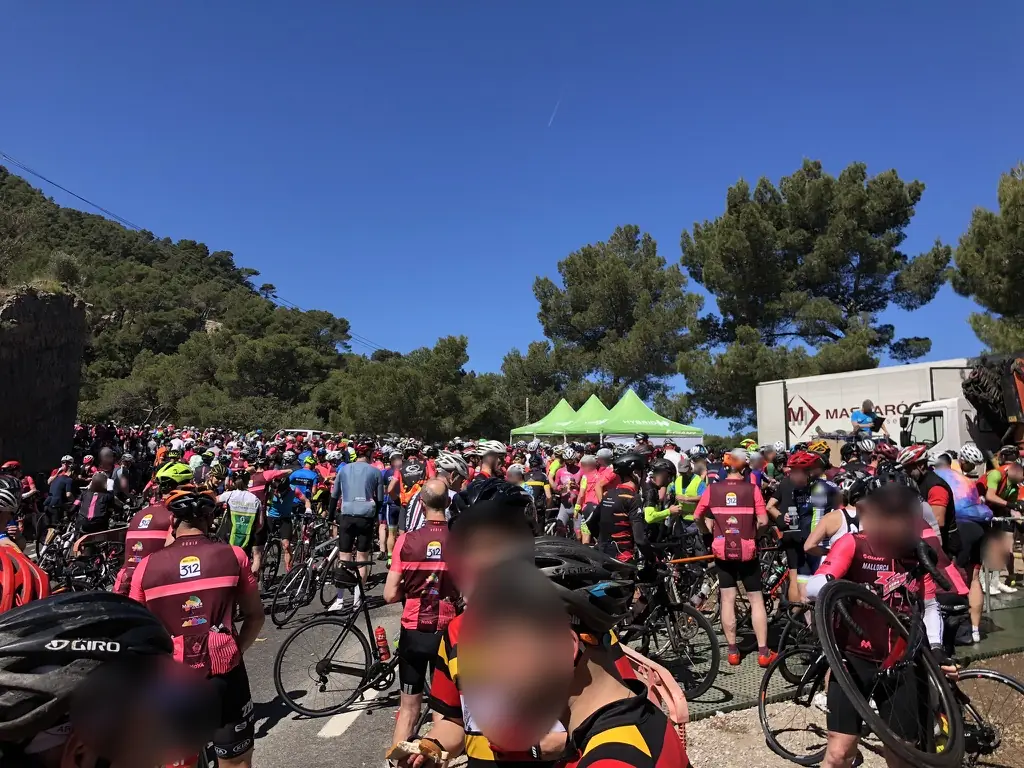
I crossed the start line at 07:18, 48 minutes after the official start, even though I was there well before the gun. The start is fast and crowded, and Coll de Femenía, the first climb, is where the field sorts itself out; mine was slow because of the traffic of riders.
Then I stood still. In all I stopped for 87 minutes, mostly in four stops at aid stations of about 10, 30, 15 and 30 minutes. I also took photos of the Serra de Tramuntana from the bike, and later I pushed on the flat to make the time back. I had not trained seriously, I did not use Summit, and my heaviest preparation was one ride of about 200 km a couple of weeks before. I cannot tell you what I ate or drank.
From my Strava file of 27 April 2019: 10 h 03 min moving, 11 h 30 min elapsed, 3,780 m of climbing.
My moving speed was close to what the day asked. Counting every stop, my average over the 249.7 km I rode was 21.7 km/h, below the 23 km/h that my 07:18 crossing required (13 h 22 min before 20:40 for 312 km; I use today's finish cut-off as a worked example because I do not know the 2019 times). The cut-off caught me at a point I do not remember exactly, probably well before km 240. I kept riding, and at about 7 p.m., worried about finishing in the dark, I took the short way to the finish and ended at 249.7 km on my file.
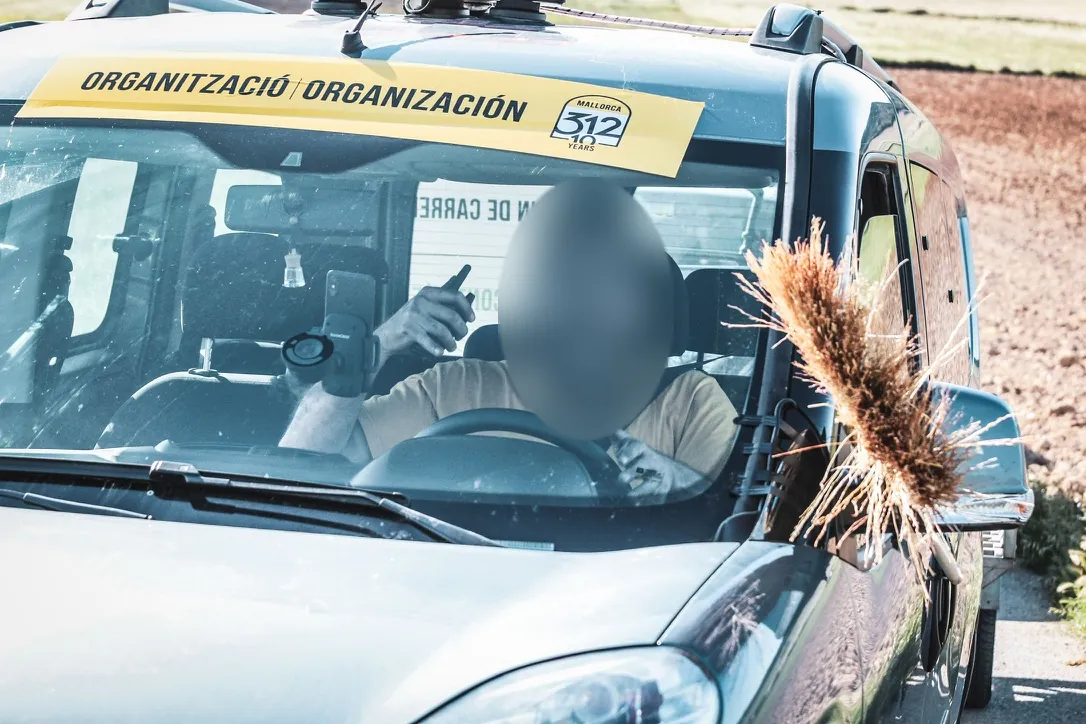
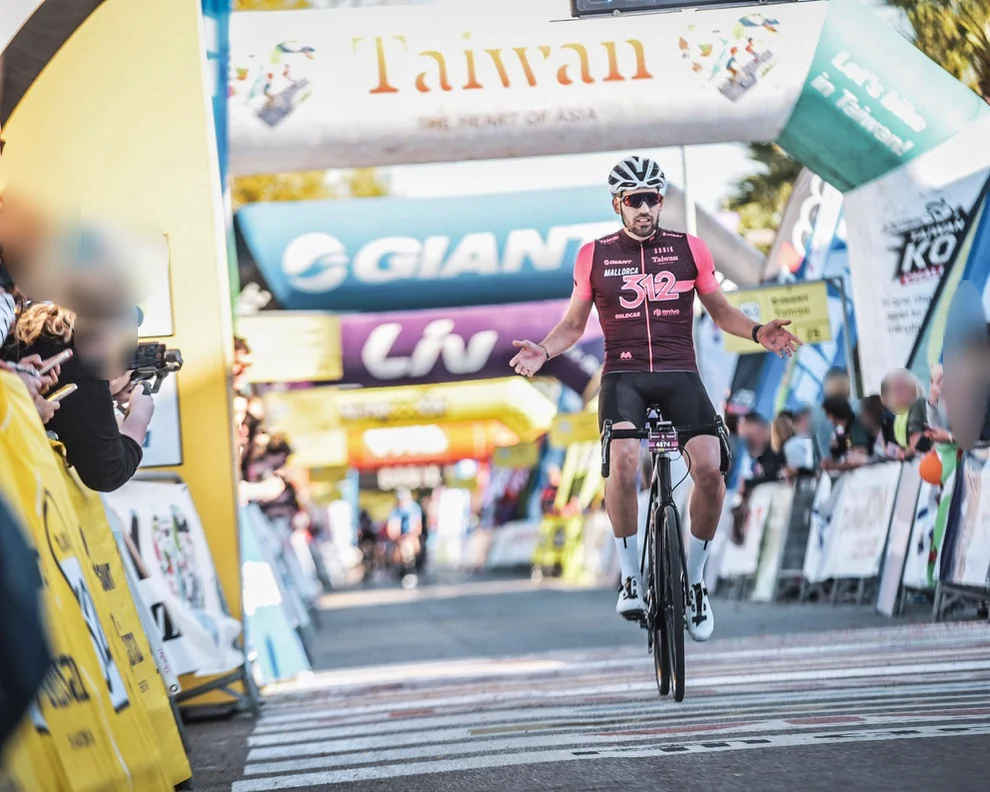
My Strava title for the ride reads: “The cut-off caught us, but with a doctorate in suffering. Next year we will settle accounts.” The organisation's sweep car caught me in the end, and I reached the finish disappointed despite the effort.
How I would prepare now
Everything I got wrong has a fix, and none of them needs a miracle.
- Start early and work back from the date. I would allow at least 16 weeks if you already ride regularly, and 20 to 24 if you start from a low base. Weeks 16 to 10 are base, then sustained climbing, with one long ride a week that grows. Weeks 9 to 5 are build: long rides at planned pace with planned fuelling. Weeks 4 and 3 are the peak, with a dress rehearsal of about 6 hours. Weeks 2 and 1 are the taper. Add an easy week after every three loading weeks. This is my own sketch, not an export from Summit, and the hours depend on the days you can ride.
- Rehearse the stops. Time every refill in the dress rehearsal. Each 10 minutes of stopping costs roughly 0.3 km/h of moving speed over the day. On the day I would carry enough food in the jersey for the first 100 km or so and skip the first two solid feeding points, Gorg Blau (km 50) and Sa Bastida (km 101); I stopped at both.
- Fuel on purpose. Published guidance gives 30 to 60 g of carbohydrate per hour as an appropriate target for longer sports and says that events over 2.5 hours may benefit from up to 90 g (Burke and colleagues, 2011). A single source is oxidised at about 60 g per hour, and going higher needs a mix of carbohydrates (Jeukendrup, 2014). I would aim for 60 to 70 g per hour and build it up in the long rides. Fluid and sodium depend on heat: I wrote about them in cycling in the heat.
- Taper for two weeks. Cut volume by 41 to 60% and keep intensity and frequency: that is the strategy that performed best in a 2007 meta-analysis of 27 studies, and a 2003 review agrees on keeping intensity. I go deeper in my article on tapering.
- Be on the line early. I would now be in position more than an hour before the gun. I slept in Can Picafort, next to Platja de Muro, and it worked well. The ride from the hotel to the start is in the dark, so bring lights; the start is around sunrise and you should not need them during the ride. Collect your bib in person at the Expo (Avenida s'Albufera 33) on Thursday 22 or Friday 23 April, 9:00 to 21:00. Take the descents with care: they are fast and crowded, above all the one from Puig Major.
Where Summit comes in
In 2019 I did not use Summit. In 2026 I prepared a 999 km, six-day crossing of Portugal the way I should have prepared the 312: I started from the date and worked backwards, and I planned the whole five-month build in Summit, as I explain in the Gran Diagonal write-up. The engine placed the base, build, peak and taper and set the weekly sessions around the days I could ride.
For the 312 I would do the same: add 24 April 2027 as my main goal (the app calls it an A race), set my weekly availability and let the plan come back from the date. When the runway is short it compresses the structure instead of dropping it, which matters if your place arrives from the Marketplace with a few weeks to go.
The part I cannot reconstruct from 2019 is the fuelling, and that is what Race fuel is for. On the event card it writes an hour-by-hour feed plan for the duration you set: grams of carbohydrate, fluid and sodium per hour, what to eat and when, and what goes in your pockets, built around the products you use and the weather at the event. I would test it in the dress rehearsal and keep what my stomach tolerates.
Both are part of the Elite plan; on Free and Pro, the day's session is a card that leads to it. You do not need a power meter for the plan, because every structured session can also be ridden by heart rate; the power analysis does need power. What each plan includes is on the pricing page.
Frequently asked questions
How many weeks do I need to train for the Mallorca 312?
For a first 312 I would allow at least 16 weeks if you already ride regularly, and 20 to 24 if you are starting from a low base, ending with a peak of about two weeks and a two-week taper.
What are the cut-off times?
On the 2026 itinerary the 312 km route has cut-offs at km 97 (11:20), km 218 (16:40) and km 285 in Artà (19:55). The finish closes at 20:40 under the 2027 rules, and at 17:00 for the 167 km and 226 km routes. The 2027 itinerary is not published yet.
What average speed do I need?
From the 6:30 gun the 312 km route needs about 22 km/h over the whole day. If you cross the line at 7:00 and stop for 45 minutes in total, you need about 24 km/h of moving speed.
Is the Mallorca 312 sold out, and how do I get a place?
The 2027 edition sold all 8,500 places within minutes of registration opening on 6 October 2026, according to the Majorca Daily Bulletin. You can join the official waiting list, or request an entry on the official Marketplace between 1 December 2026 and 31 March 2027; you then have 30 minutes to complete registration and payment.
Can I change distance during the event?
Yes. The three routes start together, and the rules allow you to change distance without telling the organisers, provided you meet the cut-offs.
How much should I eat and drink?
Published guidance says events over 2.5 hours may benefit from up to 90 g of carbohydrate per hour. I would plan 60 to 70 g per hour and practise it in training; fluids and sodium depend on heat and on the rider.
Do I need a power meter?
The event does not require one. A Summit plan can be ridden by heart rate, though the full session, in watts or in heart rate, is part of the Elite plan and the power analysis needs power.
Plan the Mallorca 312 on your calendar
Add the date as your main goal and Summit's Elite plan builds the base, build, peak and taper back from it, around the days you can ride. Every phase is computed from your date and your data; no AI model decides anything.

Get the season-planning template
The base/build/peak/taper structure as a worksheet you fill in with your own event date, free. Then a few data-driven training notes over the season. Unsubscribe anytime.